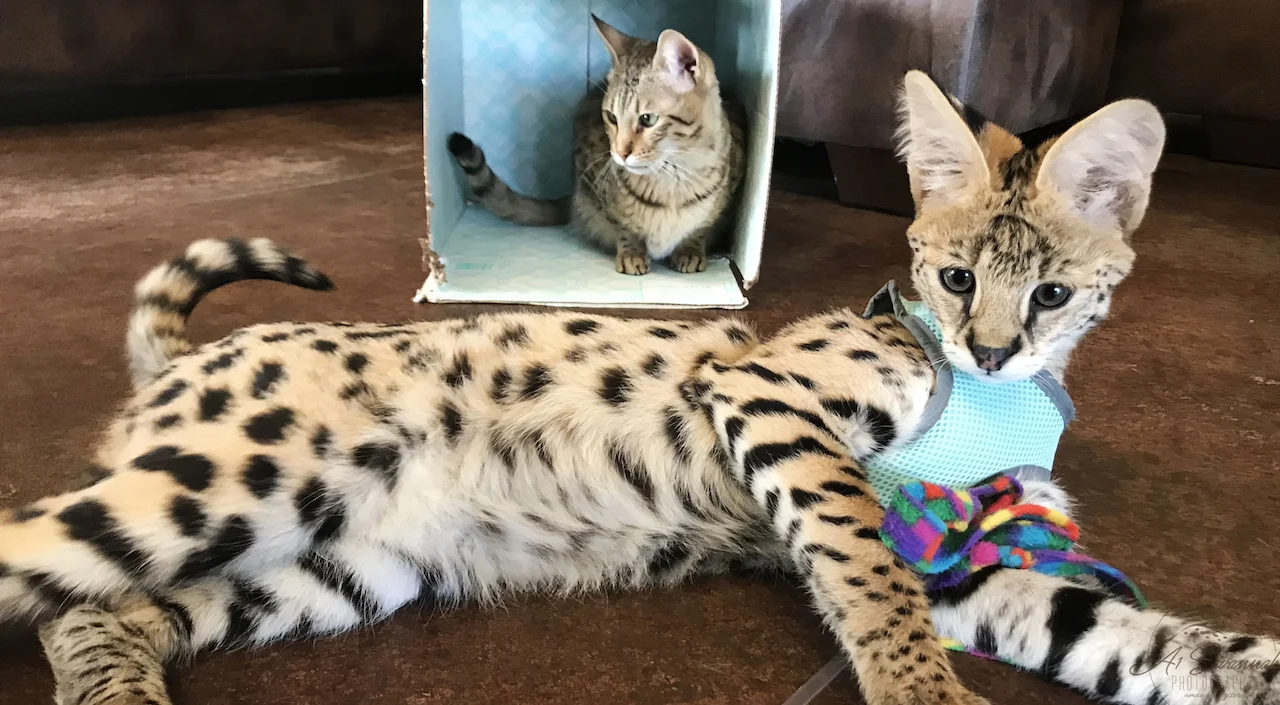
10 Health Benefits of Owning a Savannah Cat

A Savannah cat is more than just a fun-loving fluff ball who makes coming home from a hard day at work a little easier. Owning a Savannah cat can make your life better and your body healthier. Cat ownership could even protect against a variety of diseases. Here are 10 reasons your Savannah cat might be the best thing you do for your health.

Savannah Cats Help You Make Friends

Having a cat gives you an instant connection to other cat lovers. You have an easy source of small talk and amusing stories, which can be a great ice breaker at parties or even in job interviews. Lovers of Savannah cats are especially devoted. You can join message boards and play groups, using your cat as a way to connect with others.

Because Savannah cats are rare, your cat also gives you an interesting anecdote to share at parties. People who have never heard of Savannah cats may be curious. This presents the chance to talk about cat breeds, wild animal preservation, and the unique joys of owning such a special cat.

Cats Can Relieve Pain
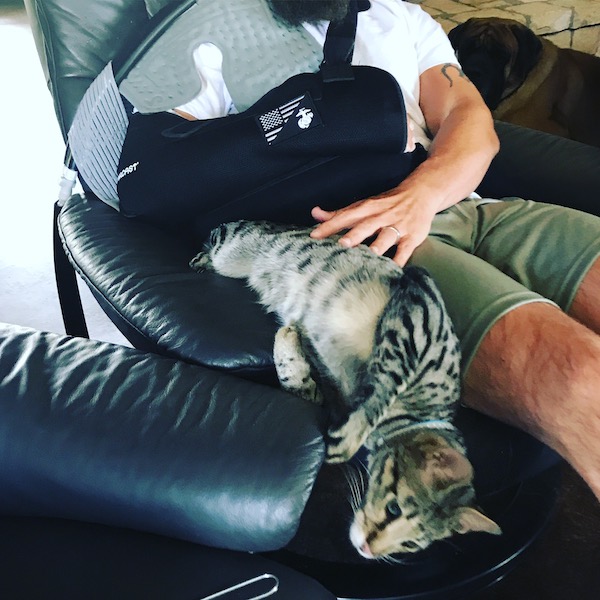
Stroking a cat for a few minutes can loosen tense muscles, offering some relief for both short-term and chronic pain. Chronic pain has a strong mental health component. Depression and anxiety can make the pain worse. Stress can make it hard to make good health decisions such as exercising and stretching. But cats can make it easier to lead a healthy lifestyle. Living with a cat is a powerful motivator that can relieve psychological pain and get you moving, thereby offering relief from physical pain, too.

Your Mental Health May Improve

Though mental health and physical health are often talked about in separate arenas, the two are inextricably linked. Depression increases the risk of a host of illnesses, including heart disease and premature death. Poor mental health can also make it more difficult to make good health choices, such as quitting smoking and eating a healthy diet.

Enter your cat. Like a savior for all aspects of your health, your Savannah cat improves your physical health by boosting mental wellness. Cats can help with anxiety and depression, improving mental health and helping you lead a happier life.

Your Heart Disease Risk May Be Lower

Heart disease is the leading killer, and a major contributed to disability worldwide. Simply owning or petting a cat can reduce your risk of developing heart disease. And if you already have a cat, your pet could save your life by reducing your risk of dying of a cardiovascular episode.

The heart-healthy benefits of Savannah cat ownership include:

  • Lower blood pressure

  • Lower cholesterol

  • Decreased triglycerides

  • A lower risk of diabetes

  • More opportunities for exercise

  • Lower stress

  • Better circulation

Kids May Be Less Likely to Develop Allergies

Cats bring in dust, dirt, and dander. Even indoor cats get dusty and dirty. That might seem like a bad thing, but it’s actually great for your health. Low-level exposure to allergens can help boost the immune system, reducing the risk of developing allergies, asthma, and similar health problems. The benefits are especially strong in kids. So if you want your child to grow up allergy-free, let them get down on the floor and play with your cat (with adult supervision, of course).

Your Children May Learn Empathy

Empathy is the ability to understand another person’s feelings. It’s a hard thing to learn. It’s also a skill that will benefit your child for their entire life. In fact, research shows that kids with empathy and social intelligence are more likely to succeed. Social skills, not intelligence, are ultimately what make or break a career.

So what does this have to do with cats? Cats help gets learn empathy. If your child wants a good relationship with your cat, they have to learn to be gentle and read the cat’s cues. This is a lesson that will extend into your child’s relationship with others, propelling your child into a happy, healthy, successful life.

A Reason to Get Moving

Exercise may be the best thing you can do for your health. It lowers the risk of virtually every disease, from cancer to dementia, improves heart health, helps you be happier, and improves your body image. Yet many people struggle to get moving, especially after a long day at a demanding job.

Savannah cats don’t get their owners any slack when it comes to the need to exercise. These intelligent, high-energy felines need lots of high-energy play. So rather than hitting the treadmill, spend some time chasing your Savannah cat. You’ll burn calories, improve your health, and have lots of fun.

Better Sleep

Everyone loves laying down and settling into blissful repose at the end of the day. Sleep is more than just a luxury. It’s vital to your health. It helps your brain process the events of the day, promoting good mental health. It can also boost your immune system and strengthen your overall well-being. Yet many of us struggle to get a good night’s sleep. Stress, busy schedules, and the constant distraction of phones keep many people tossing and turning all night.

People who own cats sleep better, even if they don’t sleep with their cats. For people with insomnia or anxiety, though, a Savannah cat offers an additional benefit: stroking your cat as you fall asleep can help you fall asleep more quickly and sleep more soundly.

A Stronger Immune System
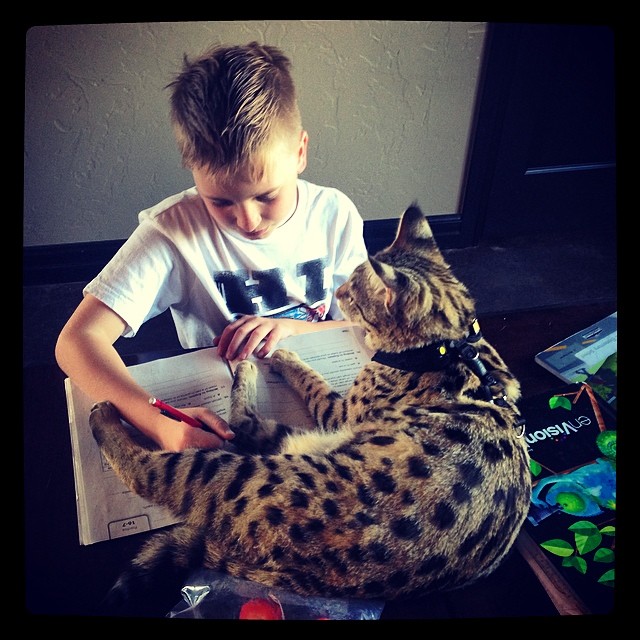
Just as exposure to dust and dander can prevent allergies, it can also strengthen your immune system. It works like this: exposure to tiny quantities of dander and dirt activate the immune system. This helps the immune system learn to fight off infections and other invaders. Particularly in children, the tiny microbes in cat fur activate the immune system for a lifetime of good health. No antibacterial soap required.

Help in an Emergency

If you have a chronic medical condition such as epilepsy or COPD, your cat can be trained to get you emergency help. Savannah cats are highly intelligent and mobile. They also bond strongly to their families. This makes them the perfect choice to train as an assistance animal. Cats have saved lives by calling 911, waking someone from a seizure, and intervening as a person chokes. Your cat is more than just a friend. He or she could save your life.

Ready to learn more about Savannah cats?Want to bring home a new member of your family? Contact us today for more information and a list of available cats!

Click on the pictures or the hyperlink to read more about each topic or kitty.

Until our next cat convo

-Amanda

How to Choose the Right Cat for You

5 Questions to Ask

Savannah cats are a cross between domestic cats and wild serval cats. These medium-sized, large-eared African cats are beautiful and intelligent. When bred with domestic cats, they produce animals that boast the best features of both types of cat. They’re highly adept jumpers, displaying incredible athletic ability. They’re also deeply loyal. Some owners even compare them to dogs.

So how can you decide whether a Savannah cat is right for you? And which Savannah cat will fit in best with your family? These five questions can help you make the right choice.


What’s your ideal cat personality?

Cats of all breeds are known for their independence, their intelligence, their ability to bond with human caregivers, and their occasional tendency toward mischief. Every Savannah cat is an individual—a unique product of their genes and environment.

You can learn a lot about a cat’s personality by looking at its generation number. Savannah cats are assigned filial generation numbers (F1, F2, F3, etc.) to denote how much wild ancestry the cat has. F1 cats have one fully wild parent. Later generations have less wild blood, and instead have wild grandparents or great-grandparents.

F1-F3 Savannahs behave similarly to their wild ancestors. They tend to be larger, look more distinct from typical domestic cats, and make more demands on their owner’s time. They’re also likely to be a lap cat, and require more time and exercise.

F4 and later generation Savannahs are more similar to domestic cats. They may still have some wild tendencies, but can be significantly more affectionate are easier to socialize and train.
 

 Why do you want a cat?

What do you want to do with your cat? Do you hope to cuddle up on the couch and watch television? If so, then a lower generation Savannah cat might be the best choice. Are you hoping to lead an active lifestyle, and plan to train your cat to participate? Savannahs often enjoy family activities and outings.

Some other questions to consider include:

  • Do you have other pets? Small animals may be intimidated by higher generation Savannahs. Higher generation Savannahs may treat birds, rodents, and other caged pets as prey. They may, however, get along well with medium to large-sized dogs.

  • Can you keep your cat safe? Savannah cats are acrobats who love to jump. If you live in a high-rise, you’ll need to secure the doors to your porch. People who live on busy streets must be proactive about keeping high-energy cats from roaming.

  • Are you more interested in a companion, or in seeing how a cat behaves in the wild? Earlier filial generation Savannahs behave like their wild ancestors. They display dominance hierarchies, hiss or chirp, and hunt for prey. Later generations show more muted instincts, and tend to be more trainable and social  

  • Do you have children? How old are they? Young children may play too roughly with Savannah cats, and end up with scratches or even bites. Older children often fare better with cats. No matter how old your children are, you must be prepared to supervise them with your cat, and to teach both the cat and the child how to safely interact with one another.

  • Do you have time to socialize your cat? The single most important predictor of any cat’s temperament is early socialization. You’ll need to expose your cat to dogs, children, other animals, and everything else it might encounter in its life during the first few weeks it spends in your home. The earlier the cat’s filial generation, the more socialization it will need.

How much time do you have to spend with your cat?

All Savannah cats need time with their owners, but the amount of time and how you spend that time varies from cat to cat. Some factors to consider include:

A1Savannahs F1 Indira Playing
  • Being physically present: All cats are social animals. They don’t like spending long days alone. So if you work very long days or travel frequently, your cat might be happier with a companion cat. Make sure the two cats get along well, and have been heavily socialized to one another. Leaving two unfamiliar cats unattended is a recipe for fighting. If you’re not interested in another cat, you may need to hire a cat sitter.

  • Training time: Earlier generation Savannahs need more extensive training. They respond well to consistency and a dominance hierarchy. This requires you to continually enforce the same rules, and to spend more time on training efforts.

  • Playtime: Earlier generation Savannahs need extensive exercise. They like going on walks, roughhousing, high-energy games of fetch, climbing, and chasing. A few minutes of play won’t be enough. More domesticated Savannahs are lower energy, but crave time with their owners. Your cat may follow you around the house, or even try to shower with you. Consider how you spend your time, how much of that time you want to spend with your cat, and whether you can manage a life with an intelligent and needy pet.

How do you want the cat to look?

Higher generation Savannah cats closely resemble wild cats. F3 and later Savannah cats show significant variability in their appearance. You can’t predict how a cat will look—or how large it will be—based solely on its filial generation number. Please take look at our “past kittens” to see some examples of cats that we have previously bred.

If your living situation requires a smaller cat, consider a lower generation cat. Although all cats vary in size, higher generation cats tend to be consistently larger.

Loki (front) is an African Serval Male KittenAlex (back) is an F4 Savannah Female

Loki (front) is an African Serval Male Kitten

Alex (back) is an F4 Savannah Female


Can you fit a pet in your budget?

Pets are a huge responsibility. From the initial cost of the pet to high-quality food, toys, scratchers, and most importantly great vet care. Making sure you can fit all of these things in your budget long term is something you need to consider before adopting any pet. 

A1 Savannahs is proud of our cats. As the founder of this breed, we know how special each and every one of our cats are. We carefully select the lineage of each cat and love them from the very beginning. They’re family.  We’re committed to finding them loving and supportive forever homes whom we love to keep in touch with. We’re happy to discuss with you whether a Savannah cat is the right choice for your family.

Until our next cat convo

-Amanda