
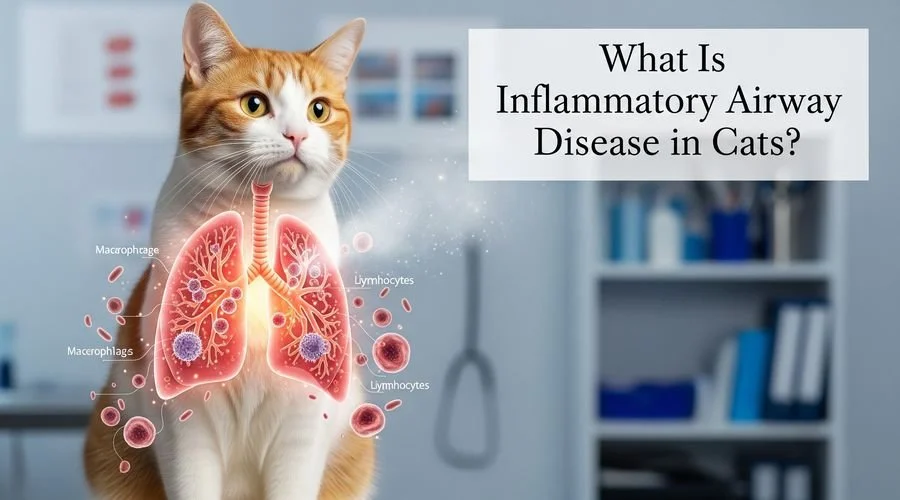
Cats are experts at hiding discomfort. Subtle changes in breathing, coughing, or activity can signal a deeper issue. One condition that often goes unnoticed is inflammatory airway disease in cats, a chronic condition that causes irritation and swelling in a cat’s airways, making breathing more difficult.
Recognizing early signs benefits both pet owners and vets by enabling quick actions for them both. Thus, the possibility of problems gets minimized. This guide deals with the symptoms, causes, diagnosis, and therapy of the condition. Besides, it offers professional resources and tips to make your cat more comfortable.
What is Inflammatory Airway Disease in Cats?
Feline inflammatory airway disease (FIAD in cats) is a condition in which a ca’s air passageways get inflamed for a long time. The swelling may involve the trachea, bronchi, or smaller lung passages, resulting in breathlessness. This long-term inflammation usually results in a cough that is not very noticeable in cats and other minor respiratory problems as well.
Generally, cats suffering from this particular disease will have the same characteristics as other cats. The main reason is that this inflammatory process occurs slowly, which is why it is important to recognize very small changes in the early stages of suffering. Unfolding early can eventually have a big effect onthe pet’s comfort and health for a long time to come.
Nutrition also plays a role in immune regulation, and high-quality Animal feed that supports overall wellness may help maintain respiratory resilience alongside veterinary care.
Once you have a clear understanding of the disease, the next step is to identify the symptoms that occur at disease onset and indicate that your cat may be affected.
Symptoms of Inflammatory Disease in Cats
Detecting early inflammatory airway diseases in cats can avoid a lot of trouble. The general signs are:
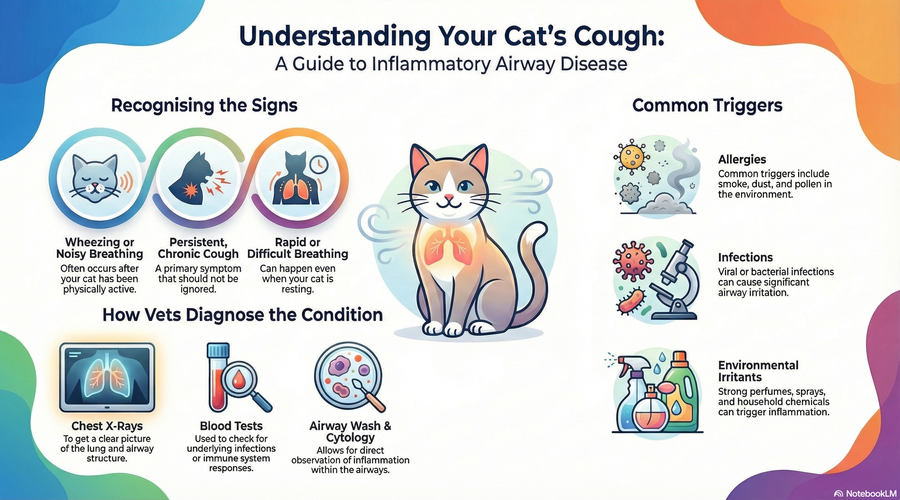
● Wheezing or breathing with noise, which mostly occurs after the cat’s activity
● Difficult or rapid breathing, even when the cat is resting
● Fatigue or disinclination to engage in play
● Decreased appetite very occasionally
● Chronic cough in cats, which is persistent
The symptoms of the disease can vary in severity. Some cats may have a rare cough, while others might be constantly indicating that they are having breathing troubles. Hence, it is advisable to take the cat to the vet even when the signs are very mild, because it is always better to treat the disease at an early stage.
Getting to know the symptoms is useful; on the other hand, recognizing the factors that cause the inflammation of a cat’s airways is also very crucial in controlling the condition.
Causes of Inflammatory Airway Disease in Cats
Inflammation of a cat’s airways can result from various factors. The most common triggers are as follows:
● Allergies to smoke, dust, and pollen
● Infections, such as viral or bacterial, that cause airway irritation
● Environmental irritants such as very strong sprays, perfumes, or household chemicals
● Mediated immune reactions causing inflammation to be heightened
There are instances when the exact cause is not determined, but there is always a presence of chronic irritation. It is good for pet owners to know these and the other possible triggers, for they will be able to limit exposures at home. At the same time, the veterinarians can make a specific treatment plan for each cat.
Identifying possible causes allows veterinarians to plan effective tests and confirm whether your cat has feline inflammatory airway disease.
Diagnosing Cat Airway Inflammation
Feline inflammatory airway disease is diagnosed by veterinarians through a combination of observation, imaging, and laboratory tests. These are:
● Assessment of the lung and airway structure by taking chest X-rays
● Conducting blood tests to detect either infection or immune responses
● Performing an airway wash and cytology to observe the inflammation
● Carrying out allergy testing to find out the possible environmental triggers
A precise diagnosis is very important as it also helps to distinguish between feline asthma and inflammatory airway disease, thus informing the choice of treatment. For veterinary teams, professional guidance like the Managing Inflammatory Airway Disease in Cats Webinar provides in-depth insight into managing complex respiratory cases.
Treatment, Care, and Home Tips
The treatment aims at minimizing the inflammation, facilitating breathing, and reducing the likelihood of reoccurrences. Veterinarians may prescribe anti-inflammatory drugs or bronchodilators. Furthermore, environmental modifications at home have a significant impact on the treatment process.
Cat owners can do very easy things to help the cat with its breathing problem:
● Choose cat litter with low dust
● Do not allow smoking in the house
● Stay away from strong sprays, perfumes, and air fresheners
● Use clean air in the house and keep it moderately humid
● Watch for any changes in the cat's breathing or coughing
A veterinary consultation should be prioritized if your feline friend is suffering from a continuous cough, producing a whistling sound while breathing, struggling to breathe, is not playful, and is refusing to eat. Taking care at an early stage is very beneficial as the cat will not only have a healthier life but also be free from complications.
If you are seeking practical experiences to gain in respiratory care, the Relief Vet Jobs could be a way to learn the hands-on skills in the clinics. This very experience can be extremely supportive in the process of navigating through and controlling the airway disorders.
The majority of cats are able to cope with this ailment if they receive veterinary treatment along with proper care at home. They will be able to enjoy their life in an easy and healthy way.
Conclusion
Feline inflammatory airway disease is frequently seen; however, it generally remains undetected. Familiarity with the signs, origins, and remedies can be a great help in a cat’s life. With the right veterinary care and timely detection, most cats can live in good condition.
FAQs
Can inflammatory airway disease in cats be cured?
Feline inflammatory airway disease is not always completely curable. Nevertheless, the proper treatment can keep the symptoms in check very well. Environmental alterations and medicines make it easier for your cat to breathe.
How serious is chronic cough in cats?
Airway inflammation or another respiratory issue might be indicated even by intermittent chronic coughing in cats. If the problem is not addressed, it could gradually develop to more serious symptoms.
What is the difference between feline asthma vs inflammatory airway disease?
Feline asthma and inflammatory airway disease appear to be quite alike, yet actually, they are not the same. Asthma is primarily a condition due to hypersensitivity leading to the constriction of the airways. On the other hand, inflammatory airway disease is characterized by a long-standing inflammation of the airways of a larger scale.
